
gen‑ai.news

The pulse of generative image & video AI.

Twice a week, the most important stories in image and video generation - new models, notable research, and meaningful product releases - distilled into a 2-minute read. No hype, no filler.

Free. Unsubscribe any time. No spam, ever.

Archive

xAI launches Imagine Image 2.0 in Grok Quality Mode
Image

xAI launches Imagine Image 2.0 in Grok Quality Mode

xAI has updated its image generation tool inside Grok with the release of Imagine Image 2.0, available through the app's Quality Mode on both web and mobile. The update introduces a range of new capabilities including precise editing, smart resizing, and multi-reference image input. Workflow templates are also part of the release, aimed at streamlining repeated or complex image tasks.

Watching Roku’s AI channel is like eating from a trough
Video

Watching Roku’s AI channel is like eating from a trough

Roku has launched a 24/7 free ad-supported streaming channel dedicated entirely to AI-generated content, sourced from a startup called Fairground. The move marks one of the more visible attempts to bring generative video into mainstream living-room viewing. Whether audiences will warm to it is another question.

Adobe Is Coming for Canva With Expanded ChatGPT Integration
Image

Adobe Is Coming for Canva With Expanded ChatGPT Integration

Adobe has expanded its presence inside ChatGPT, moving beyond its initial Photoshop, Express, and Acrobat integrations to bring its entire suite of applications into OpenAI's conversational platform. The move positions Adobe more directly against Canva, which has built much of its recent growth on accessible, AI-assisted design tools. The unified plugin signals a deeper strategic bet on ChatGPT as a creative interface.

See what 5 builders are making with Gemini Omni
Video

See what 5 builders are making with Gemini Omni

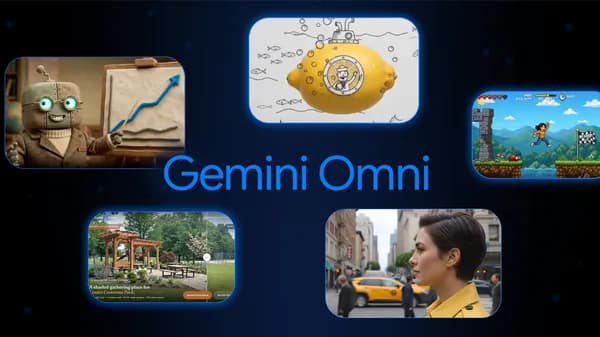
Google's Gemini Omni lets users generate and edit video through natural conversation, and a new spotlight from the company shows how five independent builders are putting that capability to practical use. The examples range from visualizing abstract ideas to streamlining video editing workflows. Together, they offer a concrete look at how conversational video AI fits into real creative and production work.
Adobe Announces It Is Further Integrating Into ChatGPT With New Unified Plugin
Multimodal

Adobe Announces It Is Further Integrating Into ChatGPT With New Unified Plugin

Adobe and OpenAI have deepened their existing partnership with a unified plugin that brings more than 70 Adobe tools directly into ChatGPT. The integration spans apps including Photoshop, Firefly, Premiere, Illustrator, and Acrobat, letting users describe a creative goal and have the AI orchestrate the appropriate tools to complete it. The plugin is available now for ChatGPT users, with guest access offered and fuller capabilities unlocked via an Adobe account sign-in.

Now that Generative AI Is the Villain, Luminar Is Spinning Its Messaging
Image

Now that Generative AI Is the Villain, Luminar Is Spinning Its Messaging

Skylum, the company behind Luminar, is adjusting how it talks about its AI-powered photo editing tools as public sentiment toward artificial intelligence grows more skeptical. Rather than leaning into AI as a selling point, the company is reframing its software around the idea of supporting human creativity. It is a notable shift for a brand that built much of its identity on being an AI-first editing platform.

Black Forest Labs makes FLUX 3 Video generally available and claims it beats Seedance 2.0
Video

Black Forest Labs makes FLUX 3 Video generally available and claims it beats Seedance 2.0

Black Forest Labs has moved FLUX 3 Video out of early access and into general availability, offering Full HD video generation with clips up to 20 seconds long. The model includes native audio output and lip-synced dialogue across more than 14 languages. According to BFL's own Elo benchmark rankings, it outperforms both Gemini Omni Flash and Seedance 2.0.

Car Photography Company Sues Midjourney for Allegedly Copying Thousands of Its Photos
Image

Car Photography Company Sues Midjourney for Allegedly Copying Thousands of Its Photos

A car photography company has filed a lawsuit against Midjourney, alleging the AI image generator used tens of thousands of its copyrighted vehicle photos as training data without authorization. The case adds to a growing body of copyright litigation targeting generative AI companies over their use of unlicensed visual material. It is one of the more focused suits in the space, centering on a single industry's photographic catalog rather than a broad coalition of creators.

ByteDance launches SeedRealtime full-duplex AI model
Multimodal

ByteDance launches SeedRealtime full-duplex AI model

ByteDance has released SeedRealtime, a full-duplex multimodal model that handles audio, video, and text within a single unified system. Unlike turn-based conversational AI, it supports continuous, overlapping dialogue with natural timing and proactive responses. The model represents a step toward more fluid human-computer interaction without the stop-and-start feel of earlier voice interfaces.

Mistral releases Shieldstral for multimodal moderation
Multimodal

Mistral releases Shieldstral for multimodal moderation

Mistral has released Shieldstral, a 3-billion-parameter open-weights multimodal safety classifier designed to moderate text, images, and combined text-image content. The model is built for customizability, giving developers and organizations direct control over how moderation policies are applied. Its open-weights nature means it can be deployed and adapted without relying on a hosted API.

Court Rejects xAI Bid to Block Minnesota Law Targeting AI 'Nudify' Apps
Image

Court Rejects xAI Bid to Block Minnesota Law Targeting AI 'Nudify' Apps

A federal judge has declined xAI's request for a preliminary injunction to stop a Minnesota law banning AI-powered 'nudify' applications from taking effect. The ruling allows the state's restrictions on non-consensual AI-generated intimate imagery to stand while litigation continues.

No image
Multimodal

Evaluating Multimodal Vision Models with Moonshot PerceptionBench Using Robust Data Loading and Automated Judging

Moonshot's PerceptionBench offers a structured way to measure how well multimodal vision models handle fine-grained visual tasks, from OCR and object counting to depth understanding and hallucination detection. A new tutorial walks through building a complete evaluation pipeline, including environment setup, dataset loading, and automated answer judging. The workflow is designed to run in Google Colab, making it accessible for researchers without dedicated infrastructure.

xAI Fails to Block Minnesota Law Targeting AI Nudification Apps
Image

xAI Fails to Block Minnesota Law Targeting AI Nudification Apps

A federal judge has denied xAI's request for a preliminary injunction against a Minnesota law banning apps that generate non-consensual intimate imagery. The ruling allows the law to take effect while xAI's broader legal challenge continues.

Photography Gallery’s Decision to Exhibit AI Images Sparks Anger
Image

Photography Gallery’s Decision to Exhibit AI Images Sparks Anger

A Belfast photography gallery has drawn criticism from photographers and the wider arts community after hosting an exhibition that included AI-generated images alongside traditional photographic work. The decision has reignited longstanding debates about whether AI-generated imagery belongs in spaces dedicated to photography. Critics argue that exhibiting such work under a photography banner misrepresents the medium and devalues the craft of working photographers.

Google Earth Pulls AI Image Generator After Users Created Misleading Images
Image

Google Earth Pulls AI Image Generator After Users Created Misleading Images

Google Earth quietly removed its newly integrated Nano Banana AI image generator just days after launch, following reports that users were producing misleading images with the tool. The feature had only just been covered in the press when Google moved to pull it, suggesting the decision was a rapid response to early misuse.

China's MiniMax H3 is the first open model to top an AI video ranking
Video

China's MiniMax H3 is the first open model to top an AI video ranking

Chinese AI company MiniMax has released the weights for its H3 video generation model, marking the first time an open model has claimed the top spot on a major AI video benchmark ranking. The release is a notable moment for the open-source side of the generative video space, which has largely been outpaced by proprietary offerings from companies like OpenAI, Google, and Sora competitors. H3's rise to the top of the leaderboard signals that the gap between closed and open video models may be narr

No image
Image

A Tutorial on GeoAI: Designing Footprint Extraction from NAIP Imagery Using U-Net, Grounding DINO, SAM, and Mask R-CNN

A new tutorial walks through a complete GeoAI pipeline for extracting building footprints from high-resolution NAIP aerial imagery, combining classical deep learning with newer vision models. The workflow covers everything from environment setup and data preparation to training and inference across four distinct model architectures. It offers a practical reference for anyone working at the intersection of geospatial analysis and generative or segmentation-based AI.

Is paying artists enough to convince them to embrace AI?
Video

Is paying artists enough to convince them to embrace AI?

A new wave of AI startups is attempting to address longstanding concerns from the illustration community by compensating artists whose work is used in model training. Pippa is one such company, positioning itself as a more ethically grounded alternative to competitors that have trained on unlicensed work. Whether financial compensation alone is enough to shift artist sentiment remains an open question.

Snap and LinkedIn are fighting back against a flood of low-quality AI content
Video

Snap and LinkedIn are fighting back against a flood of low-quality AI content

Snap and LinkedIn are both taking steps to curb the spread of low-effort AI-generated content on their platforms. Snap is blocking AI-generated videos from its Spotlight feed, while LinkedIn has introduced a dedicated reporting option for what many users call "AI slop." The moves reflect growing pressure on social platforms to maintain content quality as generative AI tools become more accessible.

No image
Image

Judge denies xAI’s request to block Minnesota ban on ‘nudify’ apps

A federal judge has denied xAI's request to block a Minnesota law targeting so-called "nudify" apps, allowing the state's ban to remain in effect. The ruling is a setback for xAI, which had challenged the law on legal grounds. The case adds to a growing body of litigation around state-level regulation of generative AI tools.

Is this Billboard Hot 100 hit AI slop?
Image

Is this Billboard Hot 100 hit AI slop?

Fenix Flexin, known as a member of Los Angeles rap duo Shoreline Mafia, has a solo track climbing the Billboard Hot 100 - but listeners and critics are questioning whether "Rubberz" was generated by AI. The song marks a sharp stylistic departure from his usual trap-influenced West Coast sound, fueling speculation. Fenix has denied the claims while doing little to address the specific concerns raised.

Judge refuses xAI's request to stop a Minnesota law banning 'nudify' apps
Image

Judge refuses xAI's request to stop a Minnesota law banning 'nudify' apps

A federal judge has declined xAI's request to block a Minnesota law targeting so-called "nudify" apps, which use AI to generate non-consensual nude imagery. The ruling allows the law to remain in effect while the broader legal challenge proceeds. xAI had filed the lawsuit just days before seeking the emergency injunction.

ByteDance's Seedance 2.5 generates 30-second video clips with built-in audio
Video

ByteDance's Seedance 2.5 generates 30-second video clips with built-in audio

ByteDance has released Seedance 2.5, an AI video model capable of generating clips up to 30 seconds long with audio produced in the same pass. The model accepts a wide range of reference inputs, including images, videos, and audio files. For production workflows that currently involve stitching together many short segments, this could meaningfully reduce the steps involved.

xAI adds character references and 1080p to Imagine Video 1.5
Video

xAI adds character references and 1080p to Imagine Video 1.5

xAI has updated its Imagine Video model to version 1.5, adding support for character and voice references, prompt-only generation, and native 1080p output. The update gives users more control over how characters look and sound across generated clips. Multi-reference inputs are also now supported, allowing several reference elements to be combined in a single generation.

Google handed users the easiest possible tool for fake satellite imagery, then pulled it after two days
Image

Google handed users the easiest possible tool for fake satellite imagery, then pulled it after two days

Google quietly removed its Nano Banana 2 image generation model from Google Earth just two days after launch, following demonstrations of how easily it could produce convincing fake satellite imagery. A straightforward text prompt was enough to populate an empty lot near the Mexican border with a fabricated column of refugees - highlighting the real-world risks of pairing generative AI with geospatial tools.

Gemini for macOS adds new "Speak to Window" feature
Image

Gemini for macOS adds new "Speak to Window" feature

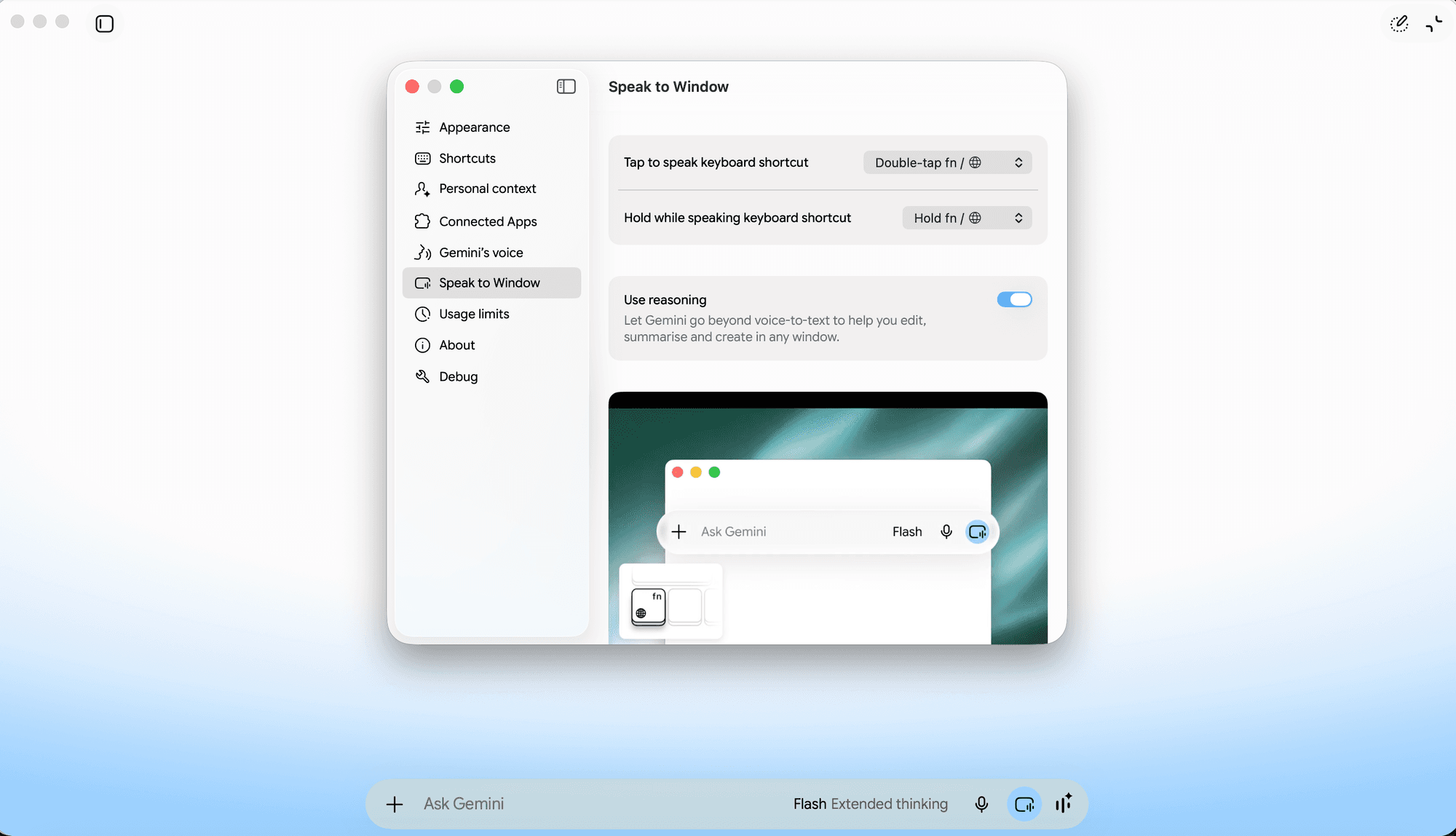
Google's Gemini desktop app for macOS has gained a "Speak to Window" feature, letting users dictate and refine text, rewrite selections, and summarize content directly from any open window. The update also extends image editing capabilities to the desktop environment. It represents a meaningful expansion of Gemini's voice and editing tools beyond the browser.

No image
Image

Google nixes its Earth AI feature one day after launch, amid criticism it would spread misinformation

Google has pulled an AI feature tied to Google Earth less than 24 hours after its release, following swift public criticism that it could be used to fabricate and spread false geographic imagery. The tool let users generate AI-created visuals and layer them directly over real satellite map data. The rapid reversal highlights the ongoing tension between rolling out generative AI features quickly and anticipating their potential for misuse.

Google Earth’s AI deepfake tool only lasted one day
Image

Google Earth’s AI deepfake tool only lasted one day

Google pulled an AI image-editing feature from Google Earth less than 24 hours after launching it, following concerns that it could be used to fabricate misleading depictions of real-world locations. The tool allowed users to alter satellite imagery with text prompts, raising immediate questions about its potential for misuse. Google had initially pointed to watermarking and content filters as safeguards, but those measures proved insufficient to prevent the backlash.

Snapchat is cracking down on AI slop in Spotlight
Video

Snapchat is cracking down on AI slop in Spotlight

Snapchat is pulling AI-generated videos from its Spotlight recommendation feed, marking one of the more direct moves by a major social platform to limit the spread of synthetic content in public discovery surfaces. The change targets the low-effort, algorithmically churned material that has become common across short-video platforms. Creators who use AI tools will still be able to post, but their content will no longer surface to users who haven't chosen to follow them.

Google rolls back the needless AI generation tools it added to Google Earth
Image

Google rolls back the needless AI generation tools it added to Google Earth

Google has quietly removed AI image generation tools it had added to Google Earth, pulling the feature less than a day after it went live. The tools drew criticism for making it easy to produce misleading satellite-style imagery. The swift reversal suggests the rollout was not fully thought through before it reached users.

Here’s the problem with putting an AI image generator in Google Earth
Image

Here’s the problem with putting an AI image generator in Google Earth

Google Earth's new AI image generation feature, called Nano Banana, lets users blend text prompts with real satellite and aerial imagery - raising immediate concerns about how convincingly it can fabricate scenes of real-world locations. Researchers at Digital Digging have already demonstrated how the tool can produce images depicting refugees near the US-Mexico border and bomb craters near hospitals in Gaza. Google says every generated image carries a SynthID digital watermark, but questions re

No image
Video

Snapchat no longer rewards fully AI-generated Spotlight content

Snapchat has updated its Spotlight recommendation system to exclude content that is fully generated by AI, reserving distribution rewards for videos made by real people. The move signals a growing platform-level pushback against low-effort, algorithmically gamed AI content. It marks one of the more concrete policy lines drawn by a major social app on the question of AI-generated media.

Google Earth’s New AI Lets Anyone Fabricate Completely Bullshit Satellite Images
Image

Google Earth’s New AI Lets Anyone Fabricate Completely Bullshit Satellite Images

Google Earth has introduced an AI feature that allows users to generate synthetic satellite imagery from text prompts, placing fabricated scenes - refugee camps, nuclear facilities, accident sites - into real geographic locations. The capability raises immediate concerns about the ease with which convincing but entirely false geospatial imagery can now be produced. 404 Media demonstrated how quickly a single sentence can conjure a misleading image tied to a real place on the map.

The Nano Banana AI Image Generator Has Arrived in Google Earth
Image

The Nano Banana AI Image Generator Has Arrived in Google Earth

Google has integrated its Nano Banana AI image generator into Google Earth, giving users the ability to reimagine any location they are viewing in different visual styles or historical eras. The feature builds on Google's existing generative AI efforts and brings them directly into a widely used mapping and exploration tool. It marks one of the more practical deployments of generative image AI within a consumer geography product.

Nano Banana image generation comes to Google Earth
Image

Nano Banana image generation comes to Google Earth

Google Earth has added an AI image generation feature called Nano Banana, allowing users to visualize historical versions of real-world locations. The tool uses generative AI to produce pictures of how places may have appeared in the past. It marks one of the more grounded applications of image generation in a mainstream mapping product.

xAI’s last-minute scramble to stop Minnesota’s anti-nudification app law
Image

xAI’s last-minute scramble to stop Minnesota’s anti-nudification app law

xAI has filed a lawsuit against Minnesota Attorney General Keith Ellison, challenging a state law targeting so-called "nudification" apps on First Amendment grounds. The company says the law's penalties would force it to restrict Grok Imagine's image-editing capabilities in the state. The case arrives months after a major content moderation incident in which Grok generated millions of explicit deepfake images, including images of minors.

Google Dumps AI Tool That Turned You Into a Meme
Image

Google Dumps AI Tool That Turned You Into a Meme

Google has quietly discontinued its "Me Meme" feature, a tool that allowed users to insert themselves into meme-style images using AI. The shutdown follows a pattern of short-lived generative AI experiments being pulled back after limited traction. The feature had only been available for a few months before being shelved.

Instagram Pushes AI Video of Film Crew Shooting Miami Disaster to 700 Million Views
Video

Instagram Pushes AI Video of Film Crew Shooting Miami Disaster to 700 Million Views

An AI-generated video showing a miniature Miami being destroyed by a massive wave - while a fictional film crew documents the scene - has surpassed 700 million views on Instagram. The clip's spread has prompted questions about Meta's role in amplifying AI-generated content, particularly disaster imagery. Some observers are asking whether the platform's recommendation systems are doing enough to distinguish synthetic media from real events.

Google's SynthID watermark is hard to break, but it doesn't solve AI disinformation
Image

Google's SynthID watermark is hard to break, but it doesn't solve AI disinformation

Google's SynthID embeds invisible watermarks into AI-generated images and audio, and testing suggests the technology is technically resilient - surviving compression, cropping, and other common manipulations. But even a robust watermarking system faces fundamental limits when it comes to curbing AI-driven disinformation at scale.

No image
Image

As AI content floods the internet, Pangram raises $9M to detect it

Pangram has closed a $9 million funding round to expand its AI-generated content detection platform. Alongside the raise, the company launched Pangram 4, an updated text detection model, and introduced an AI image detection model currently in research preview. The move comes as synthetic content continues to proliferate across the web.

Researchers Create Tool to Trace Fake Videos to the AI System That Made Them
Video

Researchers Create Tool to Trace Fake Videos to the AI System That Made Them

Researchers have built a tool capable of identifying which AI system generated a given synthetic video, by detecting subtle visual patterns that generative models leave embedded in their output. The approach treats these invisible artifacts as a kind of fingerprint unique to each model. As AI-generated video becomes harder to distinguish from real footage, attribution tools like this could become an important part of verification workflows.

ICYMI: Black Forest Labs opens FLUX 3 Video early access
Video

ICYMI: Black Forest Labs opens FLUX 3 Video early access

Black Forest Labs has opened early access to FLUX 3 Video, its latest video generation model capable of producing clips up to 20 seconds long with native audio. The release signals a significant expansion of the FLUX lineup beyond still images, with additional model variants already on the roadmap.

Microsoft previews MAI-Image-2.5-Pro and MAI-Voice-2-Flash
Image

Microsoft previews MAI-Image-2.5-Pro and MAI-Voice-2-Flash

Microsoft has quietly previewed two new models in its Azure AI Foundry platform: MAI-Image-2.5-Pro, aimed at high-fidelity image generation, and MAI-Voice-2-Flash, designed for faster and more cost-efficient speech synthesis. The announcements signal Microsoft's continued push to build out its own first-party model lineup alongside its existing partnerships. Both models are currently in preview, suggesting they are being made available to select developers for early testing.

No image
Image

Bringing Nunchaku 4-bit Diffusion Inference to Diffusers

Hugging Face has published a guide on integrating Nunchaku, a 4-bit quantization engine for diffusion models, into the Diffusers library. The integration allows developers to run quantized diffusion pipelines with significantly reduced memory requirements. This opens up high-quality image generation to hardware configurations that would otherwise struggle with full-precision models.