Adobe brings its Firefly AI Assistant inside of Premiere, Photoshop and Illustrator
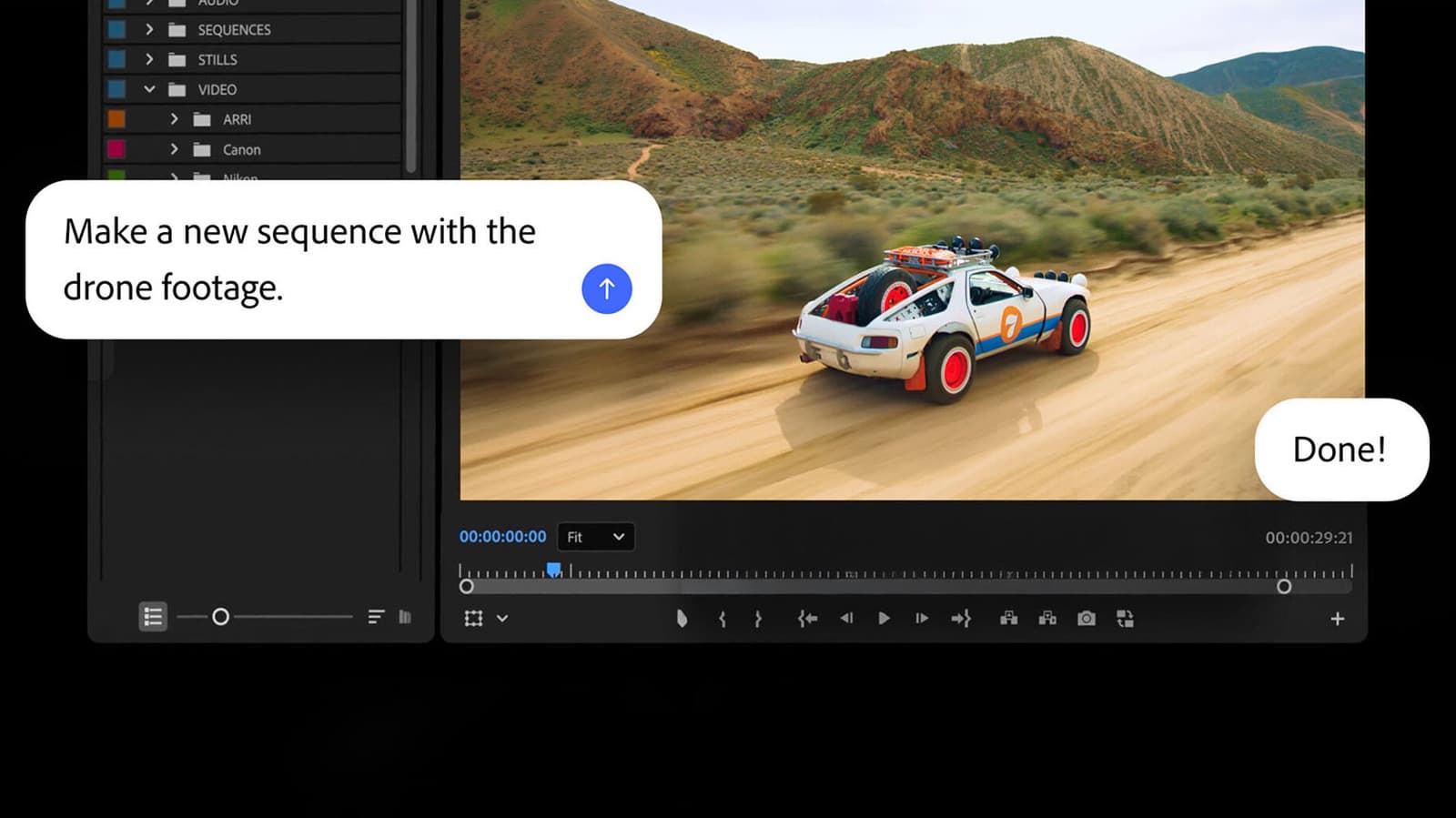
Adobe has embedded its Firefly AI assistant into three of its flagship applications - Premiere Pro, Photoshop, and Illustrator - making generative AI features available directly within the interfaces designers, editors, and illustrators already work in daily. The integration means users no longer need to visit a separate Firefly web interface or switch contexts to access AI-assisted generation and editing tools.
Firefly, Adobe's family of generative AI models, has been available as a standalone web application since its public launch in 2023. Adobe has gradually threaded Firefly capabilities into its Creative Cloud suite over the past couple of years, with features like Generative Fill in Photoshop and Generative Extend in Premiere Pro serving as early examples. This latest update appears to go further by placing a more unified assistant interface inside each application, allowing users to prompt and interact with AI tools in a more conversational or guided way.
The practical significance of this kind of integration is that it lowers the friction involved in using AI during a creative session. When generative tools live outside the main application, they tend to get used sparingly or only for specific tasks. Bringing the assistant in-app means it can be consulted mid-project, whether a video editor needs to fill a gap in footage, a designer wants to try a generative variation, or an illustrator is looking to expand a composition.
Adobe has been careful to position Firefly as trained on licensed and public domain content, which matters to professional users concerned about intellectual property. That distinction has helped drive adoption in commercial workflows where other generative tools carry legal uncertainty. With the assistant now woven more tightly into Premiere, Photoshop, and Illustrator, Adobe is making a clear push to keep AI-assisted creative work within its own ecosystem rather than ceding ground to standalone generative tools from other developers.