Photographer Disturbed By AI-Generated ‘Women’ in Beauty Magazine
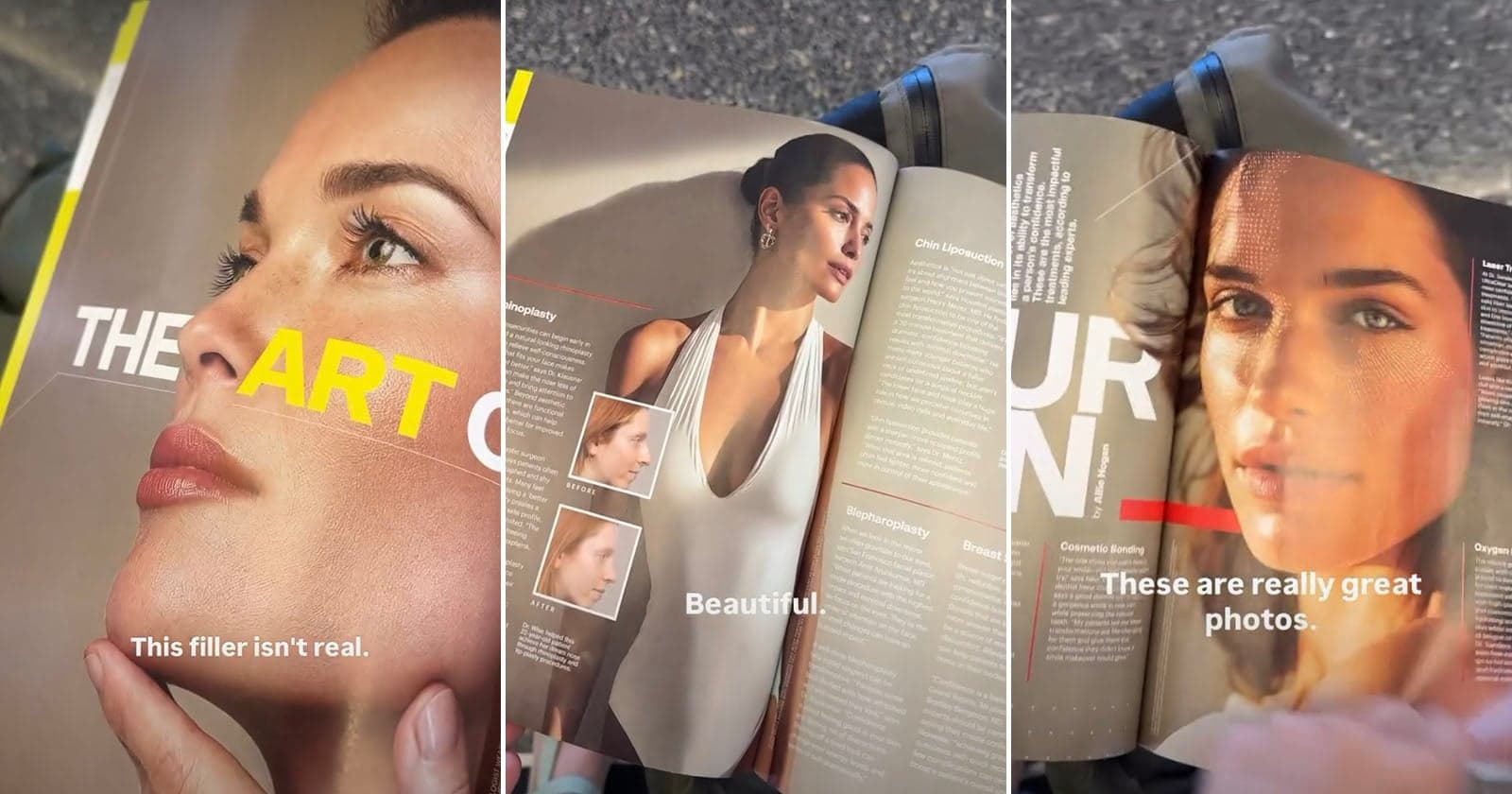
Austin-based photographer and director of photography Cassandra Klepac recently came across AI-generated images of women in a beauty magazine - a discovery she found deeply unsettling. Rather than a clearly labeled experimental feature, the images appeared to be presented as standard editorial content, blurring the line between AI-produced visuals and photography created by human professionals.
The incident points to a growing trend in fashion and beauty publishing, where generative AI tools are increasingly being used to produce imagery that would traditionally require a full creative team - photographers, models, stylists, hair and makeup artists, and art directors. As these tools improve in their ability to render realistic human likenesses and skin detail, the gap between AI output and professional photography continues to narrow, making detection harder for the average reader.
For working photographers like Klepac, the concern is not purely aesthetic. Commercial beauty and fashion photography represents a significant portion of the industry's paid work, and the adoption of AI-generated imagery by publishers directly affects livelihoods across the entire production chain. There are also broader questions around disclosure - whether publications have an obligation to inform readers when the people depicted in images do not actually exist.
The situation reflects a tension that is playing out across many creative fields: generative AI offers publishers a faster and cheaper path to polished visual content, but it does so by sidestepping the human labor and craft that have historically defined the industry. As more outlets quietly incorporate AI imagery into their pages, voices like Klepac's are pushing for clearer standards around labeling and ethical use - a conversation the publishing world has been slow to have openly.