SynthID Watermarking Gains OpenAI, Nvidia, and Industry Backing
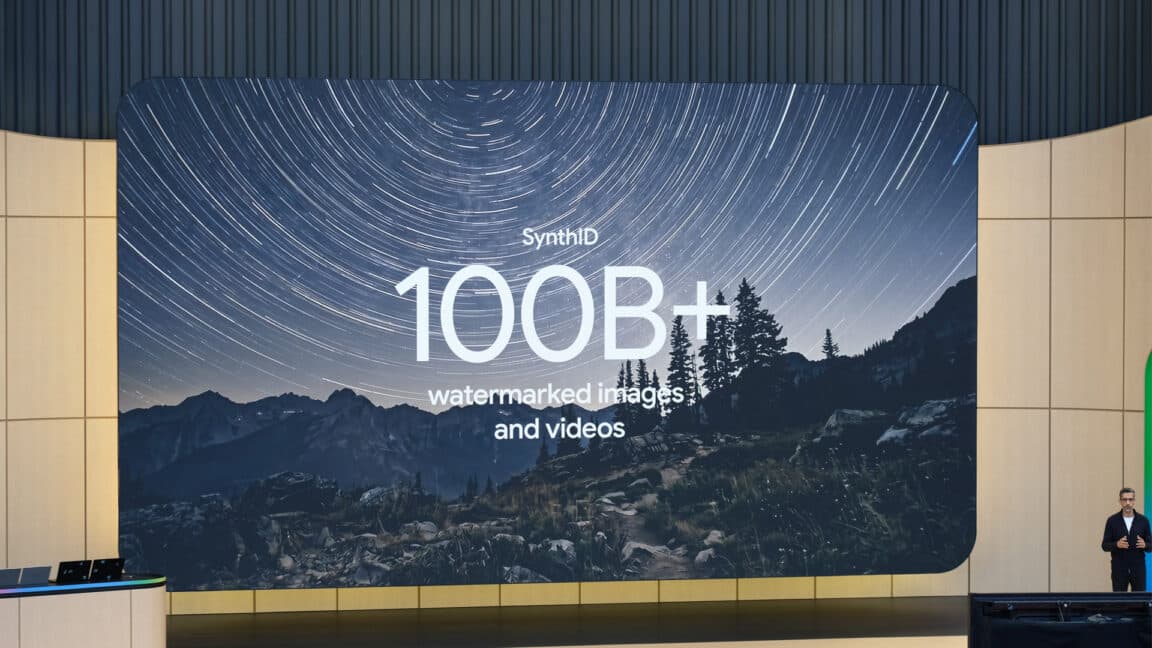
SynthID, Google DeepMind's system for embedding invisible watermarks in AI-generated content, is moving from a Google-proprietary tool toward something closer to an industry standard. At Google I/O, the company announced that OpenAI, Nvidia, and several other AI providers are adopting SynthID, meaning generated images and videos from those platforms will carry markers that can be verified through Google's detection tools.
OpenAI confirmed separately that output from ChatGPT image generation, Codex, and its API will include both SynthID watermarks and C2PA Content Credentials metadata. C2PA works differently from SynthID - it embeds a manifest in the file's metadata that records provenance information, whereas SynthID hides signal in the pixel or audio data itself in a way designed to survive common edits and re-saves. Using both together is a hedge: C2PA is easier to strip but more human-readable, while SynthID is harder to remove but requires specific detection software.
The practical significance is one of scale. SynthID has been applied to Google-generated content for some time, but its value as a detection tool is limited when most AI-generated content online comes from other providers. Bringing OpenAI and Nvidia output under the same watermarking umbrella substantially increases the share of AI content that could, in principle, be identified as such.
Open questions remain. Watermarks embedded at generation time can be degraded by screenshot, re-encoding, or deliberate adversarial attack. And the detection infrastructure - the tools that read SynthID markers - is not yet uniformly integrated into social platforms or browsers where most people encounter AI content. The expansion is a meaningful step, but the gap between technical capability and consumer-facing transparency is still wide.