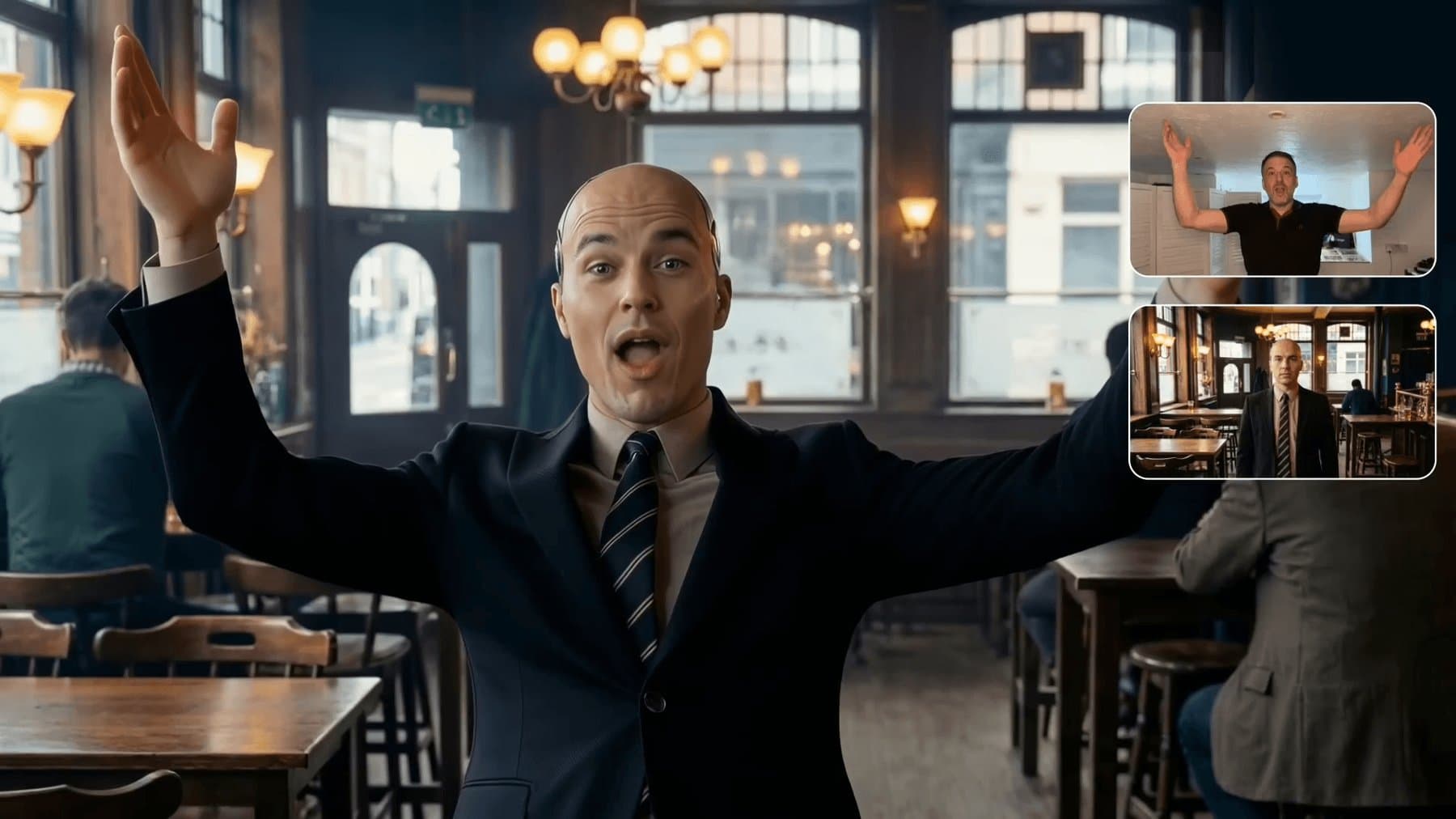
The future of Hollywood isn’t feeding prompts into vanilla gen AI models

The conversation around generative AI in Hollywood has largely outpaced the reality. Most commercially available video models still produce short, visually inconsistent clips, and several high-profile studio-AI partnerships have quietly fallen apart. The result has been a lot of short-form content that few would call compelling filmmaking.
"Dear Upstairs Neighbors," a short film showcased at Tribeca 2026, represents a more considered path. Rather than feeding prompts into general-purpose models, the production team worked with Google DeepMind to train custom versions of Veo and Imagen on purpose-built concept art created specifically for the project. That distinction matters - a custom-trained model can learn the specific visual language, character design, and aesthetic consistency that a production requires, whereas a generic model has no knowledge of the world being built.
This approach is more resource-intensive and requires a closer working relationship with an AI provider, which immediately raises questions about who can realistically pursue it. Independent filmmakers without access to Google DeepMind partnerships are unlikely to replicate this pipeline in the near term. But it does demonstrate that the visual inconsistency problem plaguing most AI-generated footage is not necessarily an inherent limitation of the technology - it is, at least in part, a limitation of using models that were never trained on your specific project.
The broader takeaway for the industry is that generative AI in serious production contexts may function less like a plug-and-play tool and more like a bespoke workflow built around custom data. That shifts the conversation away from which consumer-facing model produces the best results and toward questions of data preparation, model fine-tuning, and the kind of institutional access needed to make it work. Whether that model is practical for anything beyond well-resourced productions remains an open question, but "Dear Upstairs Neighbors" at least offers a concrete example of AI-assisted filmmaking that goes beyond slop.