The Gemini app is bringing personalized image creation to more users.
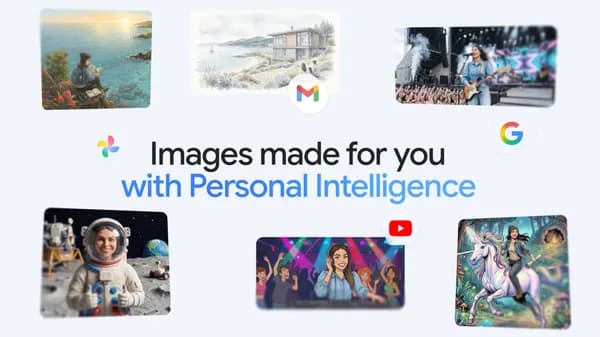
Google is rolling out an expansion of its Personal Intelligence feature within the Gemini app, making personalized image creation available to more users. The feature works by connecting Gemini to a user's existing Google ecosystem - including Gmail, Google Photos, YouTube, and Search - to inform the content it generates. Crucially, this data access only happens with explicit user permission, and the intent is to produce outputs that reflect a person's real interests, memories, and context rather than generic prompts.
The practical appeal here is straightforward. When a generative image tool knows, for example, that a user recently took a trip to a particular location or has a consistent visual aesthetic across their photos, it can produce results that feel meaningfully personal rather than broadly approximate. This kind of grounding in real user data is a meaningful shift from the typical text-to-image experience, where results depend entirely on how well a user can describe what they want.
Google's Gemini app has been steadily building out its multimodal and personalization capabilities over recent months. Personal Intelligence represents one of the more ambitious directions in that effort - moving beyond a standalone AI assistant toward something that can act as a persistent, context-aware layer across Google's suite of products. The image creation angle is one part of a wider set of features under this umbrella, which also touches on summarization, recommendations, and other personalized outputs.
The expansion to more users suggests Google is gaining confidence in both the technical reliability and the privacy safeguards around this approach. Connecting a generative model to sensitive personal data like email and photos is not a trivial undertaking from a trust perspective, and the opt-in framing is central to how Google is positioning the feature. For users who do choose to enable it, the promise is an image creation experience that requires less effort to make feel relevant - one that already has some sense of who you are before you type a single word.